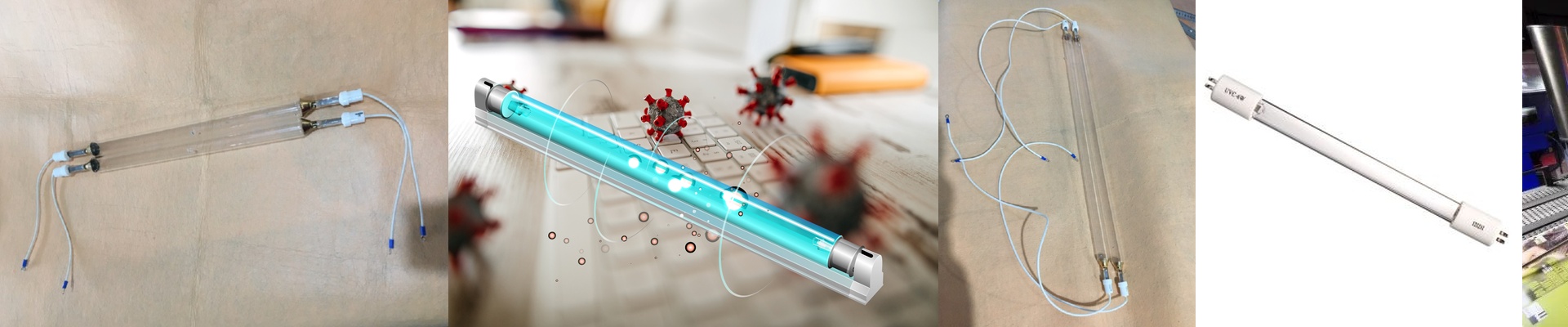
On a fast garment decoration line, the bottleneck isn’t the printer—it’s the cure. When you’re running at speed, ink that stays wet a hair too long turns into scrap: smears, set-off, and rework. On plastic bottle decoration—PE, PP, or PET—the only practical way to get true second-level cure without cooking the part is a mercury UV lamp system built around the right spectral output and stable irradiance. The real issue on the floor isn’t “more UV.” It’s the right UV, at the right intensity, delivered in the right dwell window. Mercury vapor lamps, when matched to the photoinitiator chemistry and the reflector geometry, can deliver the photon flux needed for cross-linking in a single pass. That’s why a properly tailored mercury UV lamp is the hardware that makes second-level curing—and the throughput gains that come with it—possible.
Power, spectrum, and cure efficiency: what actually matters
Mercury UV lamps aren’t interchangeable. Their performance comes down to three measurable items: spectral output, peak irradiance, and delivered energy density. **Spectral output (wavelength distribution).**Mercury vapor lamps hit multiple UV lines, with strong output around 254 nm, 313 nm, 365 nm, plus visible lines. For many industrial UV inks and coatings, 365 nm is the workhorse because it penetrates deeper into the ink film and drives cross-linking through the bulk, not just the surface. Surface-only cure at 254 nm can give you a skin that traps uncured material underneath—then you’re dealing with adhesion problems and residual tack. **Power density and peak irradiance.**Cure happens when the ink gets enough photons fast enough to trigger the photoinitiator within the dwell time under the lamp. Peak irradiance (often mW/cm² at a defined distance) determines how quickly the reaction starts. If the lamp can’t deliver enough irradiance, you either slow the line or stack more lamp heads. In practice, a high-output mercury lamp with a stable arc and an efficient reflector can provide the photon flux needed for second-level cure in a compact station. **Energy density (mJ/cm²).**The total dose the substrate sees is irradiance multiplied by exposure time. For a given ink film thickness and pigment load, there’s a minimum energy density to reach full cure. A lamp that holds stable output over time makes it possible to hit that dose consistently, even at high speeds. **Lamp electrical and thermal behavior.**Mercury lamps run on ballasted power supplies, and output climbs as the arc stabilizes. The system needs to reach target irradiance quickly and then hold steady across a shift. Thermal management—airflow, reflector temperature, and lamp position—matters because output drifts with temperature. A well-designed lamp module keeps the reflector and lamp junction temperature in the intended window so irradiance doesn’t collapse when the line runs continuous. **Reflector and dichroic coating.**The reflector decides how much of the lamp output actually lands on the substrate. High-quality dichroic reflectors transmit the UV you want while reflecting unwanted IR, which reduces substrate heating. That matters on thin plastics, where warp and heat distortion can show up fast. **Lamp life and output decay.**Mercury lamps age. Electrode erosion, mercury depletion, and envelope opacity cause output to drop over time. The key metric isn’t just rated hours—it’s the output retention curve. We design for stable output over thousands of hours, and we set maintenance intervals based on measured irradiance, not guesswork.
Second-level cure that can keep up with a fast line
In high-speed garment decoration and plastic bottle printing, the constraint is simple: the substrate can’t linger under any energy source. Second-level curing isn’t a buzzword; it’s a line-speed requirement. When the dwell time under the lamp is short, you have to deliver high peak irradiance and the right spectrum to match the photoinitiator absorption. A mercury UV lamp system built around a stable arc and optimized reflector geometry can deliver the required dose in one pass. That shows up on the production sheet:
- **Higher throughput.**When the ink cures within the available dwell time, the line runs at its intended speed instead of getting throttled by curing.
- **Less scrap.**Consistent dose cuts variability—no more tacky prints, no more set-off onto stacked bottles or garments.
- **Lower energy per part.**A focused, high-irradiance cure is often more efficient than stretching it out at lower irradiance or using broad-spectrum lamps that waste output. Plastic bottle printing adds its own constraints. PE and PP have low surface energy; adhesion depends on proper surface treatment and a fully cross-linked film. PET can take more UV, but it still warps if too much IR is present. A mercury UV lamp system that emphasizes the 365 nm line and controls IR through reflector selection and airflow helps keep the plastic dimensionally stable while still curing the ink.
Installation, compatibility, and operating reality
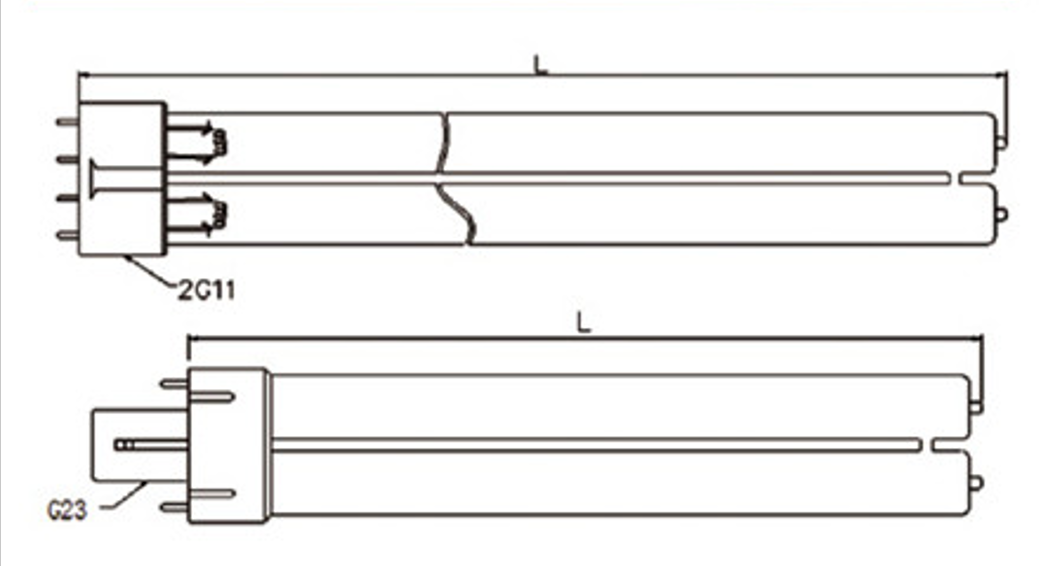
A mercury UV lamp isn’t a plug-and-play bulb. It’s a subsystem that has to match the printer, the ink, and the plant environment. **Printer and curing station compatibility.**The lamp module has to fit the curing station envelope—length, arc gap, lamp diameter, and mounting interface. The reflector geometry has to match the substrate path and print width. If the reflector is too shallow, irradiance falls off at the edges. If the lamp sits too far from the substrate, peak irradiance drops and you’ll need more dose to hit cure. **Power supply and ignition.**Mercury lamps need a ballasted power supply matched to the lamp’s rated voltage, current, and ignition characteristics. Start-up behavior matters on a production line: the lamp has to reach stable output quickly. We specify the power supply and ignition strategy so the lamp hits target irradiance within the expected warm-up window. **Ozone management.**Some mercury lamps generate ozone, which means ventilation and attention to the operator environment. Ozone-free configurations are available using special envelope materials and reflector coatings. If your plant has tight air quality requirements, specify the lamp and reflector combination accordingly. **Thermal control and substrate heating.**High irradiance brings heat. Even with dichroic reflectors, the lamp and reflector still radiate. Adequate airflow and heat shielding are necessary to prevent plastic warp and to keep the lamp running at the correct temperature. On thin-walled bottles, that isn’t optional—it’s part of the curing system design. **Maintenance discipline.**Output decays with hours. Treat lamp life as scheduled maintenance, not a failure-only event. Use a calibrated radiometer to verify irradiance at the substrate plane, and replace lamps based on measured dose performance, not a calendar. The trade-off is real: mercury UV lamps deliver strong, targeted output, but they need proper integration—electrical, thermal, and mechanical. Get those details right, and the line runs faster, the cure is repeatable, and the cost per printed piece comes down. If you want second-level curing on high-speed lines for plastic bottle printing, start with a mercury UV lamp system specified around spectral output, peak irradiance, and energy density—then match it to your ink, substrate, and printer geometry. That’s how curing stops being the constraint and starts being the enabler.